Dead Towns, New Dreams: The Travelers Finding Magic in America's Forgotten Places
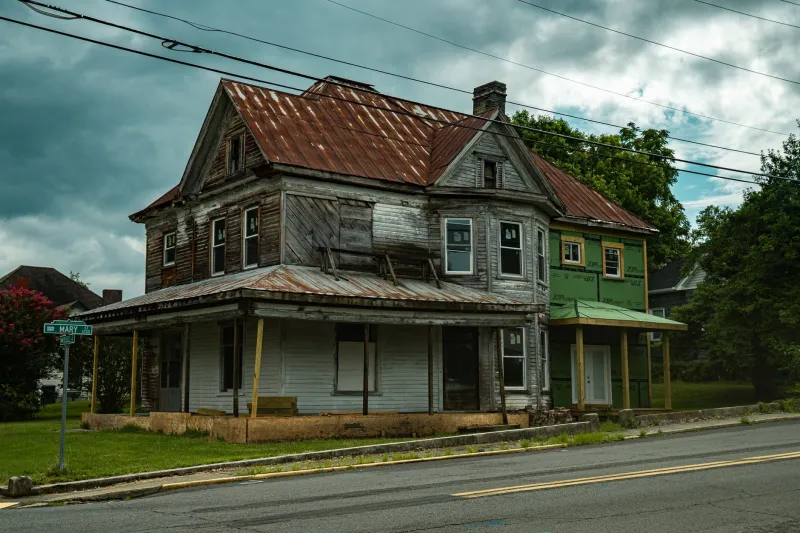
There's a specific kind of quiet that settles over a place after it's been left behind. Not peaceful quiet — more like held-breath quiet. The kind you feel walking through a half-empty downtown in a town that used to mean something, past storefronts with faded painted signs and buildings that still have good bones.
For a long time, travelers drove through those places without stopping. Now, increasingly, they're stopping — and staying.
Something strange and genuinely exciting is happening to the geography of obsolescence. The towns America discarded — the ones that lost their mines, their mills, their manufacturing base — are coming back. Not as what they were, but as something stranger and more interesting. And if you're the kind of traveler who'd rather find a scene in the making than visit one that's already been packaged for Instagram, these places deserve your serious attention.
Why Geography Creates the Conditions for Reinvention
Here's the thing about economically hollowed-out places: the same forces that emptied them out often left behind something quietly valuable. Cheap square footage. Dramatic landscapes that were always there but overshadowed by industry. A sense of space and breathing room that crowded, expensive cities simply can't offer.
Marfa, Texas is the case study everyone points to first, and for good reason. The Chihuahuan Desert doesn't care about real estate trends. It just sits there, enormous and indifferent, surrounding a town that was essentially a railroad stop and county seat with no particular reason to be interesting. Then Donald Judd showed up in the 1970s with a vision and enough stubbornness to see it through, and the rest — as they say — is art history. Today Marfa draws a steady stream of visitors who come for minimalist sculpture installations and stay for the food trucks, the dive bars, the prickly pear sunsets, and the particular energy of a place that decided to be itself on its own terms.
But Marfa is no longer the exception. It's starting to look like a template.
The Rust Belt Is Having a Moment (And It's Earned It)
Detroit gets the most press, but the creative reclamation happening across the industrial Midwest is broader and more textured than any single city's story. Places like Gary, Indiana — long shorthand for American urban decline — are seeing artists move into massive abandoned structures and find in them a scale that's simply unavailable anywhere else. Youngstown, Ohio, a city that lost half its population after the steel industry collapsed, has been quietly building a food and arts scene that locals will tell you, with justified pride, is the real deal.
What's driving this isn't nostalgia. It's economics meeting geography. A ceramicist who couldn't afford a studio in Brooklyn can rent an entire floor of a former factory in a Rust Belt city for less than a Manhattan storage unit. A tech worker who went fully remote during the pandemic realized they could live in a Victorian house in a small Ohio city for what they were paying for a studio apartment in San Francisco — and actually have a yard.
These aren't people retreating from ambition. They're people who figured out that geography is negotiable in ways it wasn't before, and they're making interesting choices.
What This Means If You're Traveling Through
Here's the traveler's angle on all of this: places in active transformation are, almost without exception, more interesting to visit than places that have already fully arrived.
When somewhere is still figuring out what it wants to be, the edges are visible. The old and the new sit right next to each other. You can eat at a restaurant that opened six months ago in a building that's been empty for thirty years. You can talk to someone who moved there from a coastal city and someone whose family has been there for four generations, and watch them navigate what their shared home is becoming.
That friction — respectful but real — is the texture of a place that's alive. It's what most over-touristed destinations have lost entirely.
In Bisbee, Arizona, a former copper mining town perched in the Mule Mountains near the Mexican border, you can walk streets that feel genuinely layered. Victorian-era miners' houses painted in wild colors. A drag scene that emerged organically over decades. Galleries next to hardware stores. It has the quality of a place that never tried to be a destination and became one anyway, which is the best kind.
Similar energy exists in places like Beacon, New York — a Hudson Valley factory town that started attracting artists after Dia:Beacon opened in 2003 and never really stopped. Or Truth or Consequences, New Mexico, a hot springs town that changed its name on a radio show dare in 1950 and has been attracting eccentrics ever since, now including a growing wave of remote workers and artists drawn by cheap land and thermal baths.
The Traveler's Responsibility in Fragile Recoveries
None of this is without complication, and it would be dishonest to skip past that.
The same forces that make these places compelling to visit — affordability, authenticity, creative energy — are exactly what gets disrupted when too many people show up at once. Marfa has already wrestled with this. Locals who've lived there for generations have watched property values climb in ways that serve newcomers more than them. The galleries and the boutique hotels are great, but they don't always serve the people who kept the town alive through the quiet decades.
Traveling to places in recovery carries a responsibility that visiting a fully established destination doesn't quite require in the same way. Spend money locally and deliberately. Skip the chain hotel if there's a family-run option. Eat where the people who live there eat. Ask questions with curiosity rather than the vague colonial instinct to assess whether a place is "worth visiting yet."
These aren't destinations waiting for your approval. They're communities in the middle of their own story. You're just passing through.
Finding Your Own Forgotten Place
The most interesting versions of this phenomenon are the ones that haven't been written about yet. And there are plenty. Small cities in Appalachia where fiber internet and low rent are drawing remote workers. Former logging towns in the Pacific Northwest where the mill is gone but the mountains aren't. Faded resort communities in the Ozarks discovering a second life through music and craft brewing.
The atlas is full of places that were written off. A surprising number of them are quietly, stubbornly writing themselves back in.
If you want to find them, look for the geographic conditions that created them in the first place: dramatic landscapes that survived the economy that built around them, building stock that's too good to demolish, and just enough critical mass of people who decided that cheap and interesting beats expensive and comfortable.
Then go. Go before the boutique hotel opens. Go while the restaurant is still in a building with visible water damage and the best food you've eaten in months. Go while the story is still being written, and you might end up feeling less like a tourist and more like a witness to something real.