Turn Off the GPS and Actually See the City: A Case for Beautiful Disorientation
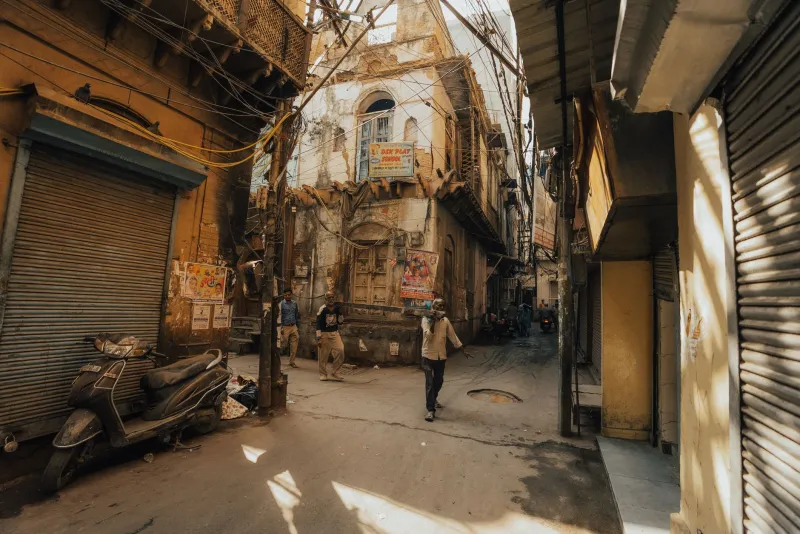
There's a particular kind of panic that hits when you realize you have absolutely no idea where you are. Your phone's buried in your bag, the street signs are in a script you can't read, and the last landmark you recognized was twenty minutes ago. For most American travelers—raised on Google Maps turn-by-turn confidence—that moment feels like failure.
It isn't. It might actually be the whole point.
We've spent the last decade engineering uncertainty out of travel. We pre-book restaurants weeks in advance, download offline maps before the plane lands, and follow color-coded walking tour routes that herd us between the same fifteen photo stops every other tourist hits. The result is a kind of frictionless, optimized experience that checks boxes efficiently and leaves surprisingly little behind in memory.
The neighborhoods that actually stick with you? Nine times out of ten, you stumbled into them by accident.
The Tyranny of the Itinerary
Let's be honest about what a rigid travel itinerary really is: a schedule designed to minimize discomfort. That's not entirely a bad thing—nobody wants to miss a once-in-a-lifetime reservation or a timed museum entry. But when every hour of a trip is pre-allocated, you're essentially touring a version of a place that someone else already decided was worth your attention.
Guidebooks, even great ones, are inherently backward-looking. The hidden gem a writer discovered three years ago has, by the time you're reading about it, probably been featured in seventeen Instagram Reels and a New York Times travel piece. The map is never the territory. And the itinerary is never the trip.
There's a concept urban planners and psychogeographers call dérive—a French word roughly meaning "drift." The idea, developed in mid-century Paris, was to move through a city guided by the landscape itself rather than any predetermined destination. You turn left because something smells interesting. You slow down because an alley looks like it holds a secret. You stop because an old man is playing chess alone outside a café and you're curious who he's waiting for.
It sounds abstract. In practice, it's just walking without an agenda. And it works.
What You Actually Find When You're Not Looking
Ask seasoned travelers about their most vivid memories and a pattern emerges. Rarely does anyone light up describing the famous cathedral they dutifully visited. More often, the stories start with some version of "I got completely turned around and ended up..."
Ended up at a neighborhood fish market in Osaka that wasn't in any guide. Ended up at a backyard birthday party in Cartagena after asking a woman for directions and getting invited in. Ended up watching a thunderstorm roll across the Aegean from a random rooftop bar that had no online presence whatsoever.
These moments share something important: they required the traveler to be present, uncertain, and open. The GPS being off wasn't a liability. It was the condition that made the experience possible.
When you're navigating by instinct and observation instead of a blue dot on a screen, your senses sharpen. You notice the way foot traffic thins out as you move away from tourist corridors. You start reading the city like a text—which streets feel lived-in, where locals actually eat lunch, which parks fill up on Sunday afternoons. You become, briefly, a participant in a place rather than a consumer of it.
How to Get Lost on Purpose (Without Being Foolish About It)
None of this is an argument for recklessness. Getting lost intentionally is a skill, and like any skill, it benefits from a little preparation.
Pick a safe anchor. Before you pocket the phone, note the name of your hotel and the nearest major cross street. That's your emergency reset button. You don't need more than that.
Give yourself real time. Purposeful wandering doesn't work in a ninety-minute window between scheduled activities. Block out a half-day minimum. Tell yourself you're not trying to accomplish anything except moving through the city on its own terms.
Follow your nose—literally. Street food smells, coffee, fresh bread, the brine of a fish stall: your senses are better navigators of authentic local life than any algorithm. When something smells good, walk toward it.
Talk to people. This is the part most American travelers avoid, usually out of some combination of shyness and the fear of being a bother. But asking someone for a restaurant recommendation, or complimenting a shopkeeper's display, or just making eye contact and nodding—these micro-interactions are the connective tissue of real travel. A lot of the best directions you'll ever get come with a personal story attached.
Let yourself be uncomfortable for a minute. The low-grade anxiety of not knowing exactly where you are is your nervous system recalibrating. Give it five minutes before you reach for your phone. More often than not, the anxiety passes and curiosity takes over.
The Optimization Trap
Here's what nobody tells you about hyper-efficient travel: it's exhausting in a specific, hollow way. You can return from two weeks abroad having hit every major sight, eaten at every well-reviewed spot, and photographed everything worth photographing—and still feel like you never quite arrived somewhere. Like you watched the trip through glass.
That feeling has a cause. Optimization, by definition, routes around friction. And friction—the awkward pause, the wrong turn, the unexpected detour—is where most of the texture of travel lives.
The map is a tool, not a master. Your itinerary is a suggestion, not a contract. And the city you're visiting has been doing just fine at surprising people long before Tripadvisor existed to categorize those surprises into star ratings.
The Atlas Mindset
At its best, travel is an act of genuine curiosity about the world—not a performance of having seen it. The explorers who shaped our understanding of geography weren't optimizing for efficiency. They were following coastlines to see where they led. They were asking questions before they knew what answers they were looking for.
You don't need to be crossing uncharted oceans to bring that spirit to your next trip. You just need to be willing to close the app, pick a direction that looks interesting, and see what the city decides to show you.
Some of the best places on earth aren't on any map. They're at the end of the wrong turn you almost didn't take.