Every Place Has a Soundmark: A Field Guide to Hearing Where You Are

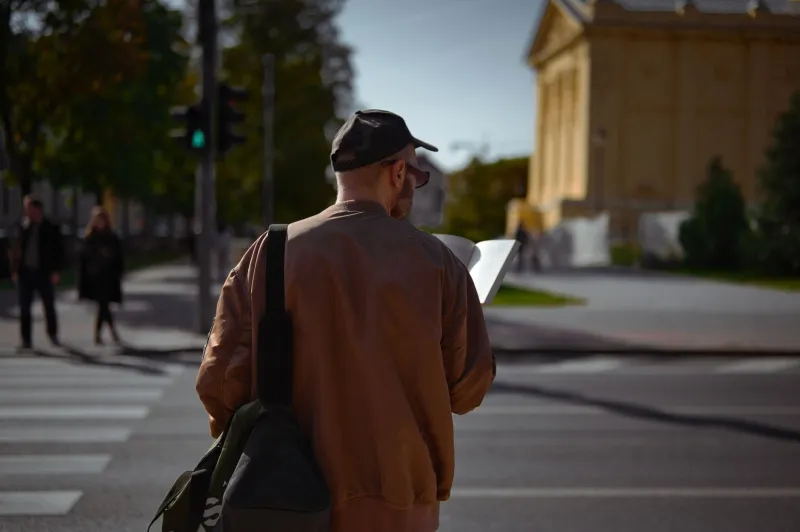
Photo: William Thomas Reed, Public domain, via Wikimedia Commons
You can stand in a plaza with your eyes shut and still know roughly where on earth you are. The giveaway is not a landmark. It is the traffic pattern, the birds, the way voices bounce off a wall, the thing humming behind all of it. Every destination runs a sonic signature, and most travelers walk straight through it with earbuds in, looking for something worth photographing.
This is a case for the opposite approach. Spend one morning of your trip listening instead of looking, and you will come away with a read on a place that no guidebook has ever quite captured.
First, Find the Baseline
Every city has a floor of sound — the layer that never fully turns off. In Manhattan it is HVAC, distant brake squeal, and a permanent low rumble that gets louder when the wind shifts. In a Costa Rican cloud forest it is insects with a hard curfew at dusk. In a small Kansas town it might be a freight line two miles out that you hear four times a day and stop noticing by day two.
The baseline is your reference point. Once you can name it, everything layered on top becomes information instead of noise.
What Sound Reveals About the Ground Beneath You
Acoustics are geography doing physics. Cold air pools in valleys overnight and bends sound along the ground, which is why a mountain town can carry a dinner conversation from a quarter mile away after dark and feel entirely muffled by noon. Narrow streets lined with four-story facades throw noise back at you; wide-open prairie lets it escape into nothing. Water flattens everything it touches, so harbor towns sound smoother than inland ones — a river or bay rounds off the sharp edges and pushes human voices forward.
Elevation shows up too. Birdsong changes species as you climb, thins out near tree line, and gets replaced by wind that owns the entire mix above it. A trail you hike at 3,000 feet and the same trail at 9,000 feet are two different listening experiences.
The Listening Walk, in Five Moves
- Sit before you walk. Ten minutes on a bench, phone in pocket. Most people hear nothing for the first four minutes because they are still waiting for something to happen.
- Name three layers. Human, machine, non-human. If you can only find one, you are in a place engineered to suppress the other two, which is itself a finding.
- Take one turn off the obvious street. Main drags are acoustically flattened for visitors. One block back is where delivery drivers argue and someone practices an instrument badly.
- Go inside twice. A market, a laundromat, a diner, a train station hall, a library. Interiors have their own signatures — tile versus wood versus corrugated metal.
- Return at the handoff hour. Between 5 and 7 p.m., a place changes shifts. Whole blocks swap one population for another, and you can hear the exchange.
Soundmarks Are the Landmarks You Cannot See
Composer R. Murray Schafer coined the term soundmark for a sound unique to a community — the audio equivalent of a monument. Charleston has its church bells. Chicago has the L clattering overhead at intervals you can set a watch by. New Orleans has a brass band rehearsing a rehearsal space with the doors propped open. Tokyo has department store chimes and the melody at rail crossings. Istanbul has ferry horns across water.
These are being quietly edited out of the world. Quieter engines, noise ordinances, delivery bikes replacing delivery trucks, and a general drift toward headphones have thinned the soundscape of a lot of places. Some registers are disappearing while others get louder. Which is a decent argument for recording sixty-second clips as you go — not for posting, just for keeping.
Listen for the Edges of a Language
You do not need vocabulary to read a conversation. Cadence, volume, and how quickly people get to the point all carry meaning. Some places greet you the instant your foot crosses a threshold; in others you are expected to announce yourself, and standing there silently will read as rude rather than shy. Learning that rule before you learn a single word saves an impressive amount of awkward hovering at counters.
Basic Etiquette
Do not record strangers' conversations — your phone mic picks up far more than you assume. Earplugs are not cheating; they are how you survive a night market long enough to enjoy it. And treat silence as data too. A room that goes quiet when you walk in is telling you something, and it is generally not a compliment.
What You Get Out of It
Sightseeing rewards the checklist. Listening rewards patience, which is harder to buy and much more memorable. You will not remember the fourth museum of the trip. You will remember the bakery where the owner turned the radio up at 6:40 a.m. and everyone in line, unprompted, adjusted their volume to match.
Try it on your next stop. One hour, no destination. The city is already talking.