The Geography of How People Move: What the Land Teaches You About Belonging
Here's something that doesn't show up in any phrasebook: the way a person from Bogotá walks through a crowd is different from the way someone from rural Kyoto does. Not because of culture in the abstract sense — not because of some vague national character — but because the places they grew up in literally shaped the mechanics of how they move through space.
This isn't a metaphor. It's closer to applied geography, and once you start seeing it, you can't unsee it.
The Body Learns From the Land
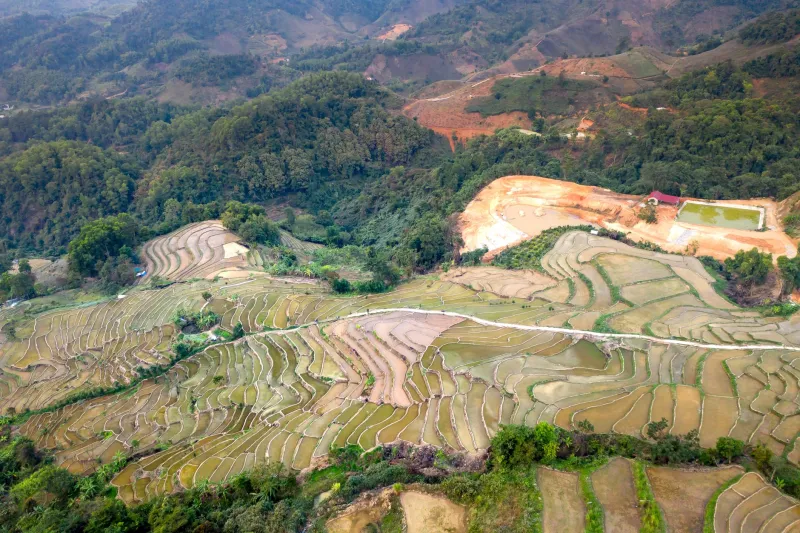
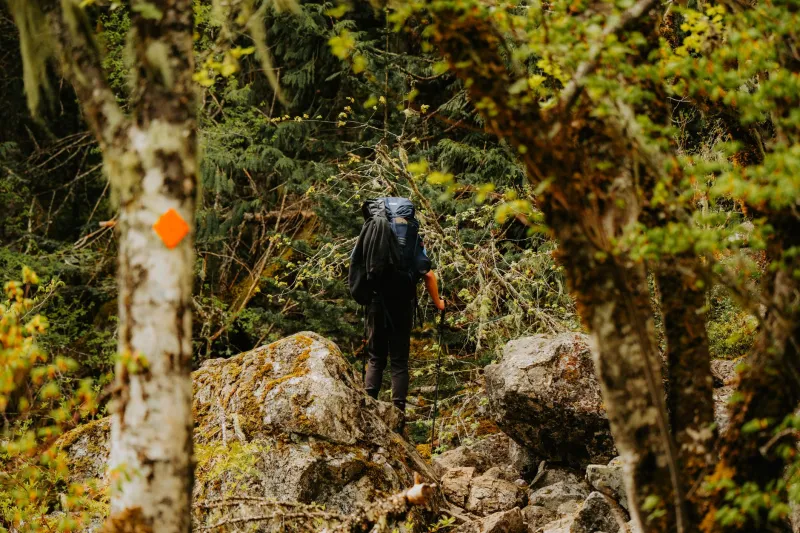
Think about how terrain shapes movement at the most basic level. Mountain communities — in the Andes, the Alps, the Ethiopian Highlands — develop a particular relationship with vertical space. Trails switchback. Paths are narrow. You move single-file and you learn to read the footing ahead of you, not the horizon. Over generations, this produces a certain quality of attention — a groundedness, a preference for close-range visual cues over broad gestures.
Contrast that with communities that developed on open plains or wide river deltas, where visibility is the baseline condition of life. Gesture vocabularies in these environments tend to be broader, more expansive, because there's space for them. When you're communicating across a field, subtlety doesn't carry.
Researchers in environmental psychology have documented versions of this pattern across cultures, but you don't need a study to notice it. Spend a week in the Swiss Alps and then a week in the flatlands of the Netherlands, and pay attention to how people use their hands when they talk, how far apart they stand, how they navigate a busy sidewalk. The differences are real, and they're not random.
Urban Grids and Personal Space
City layout is one of the most underappreciated influences on how locals interact with strangers — and therefore one of the most useful things a traveler can understand before arriving somewhere new.
American cities built on grid systems — Chicago, Phoenix, much of Manhattan — produce a particular pedestrian psychology. The grid is efficient, predictable, and slightly anonymous. You can navigate it without making eye contact. Encounters are transactional. Personal space norms in grid cities tend to be wider, partly because the infrastructure supports the option of not engaging.
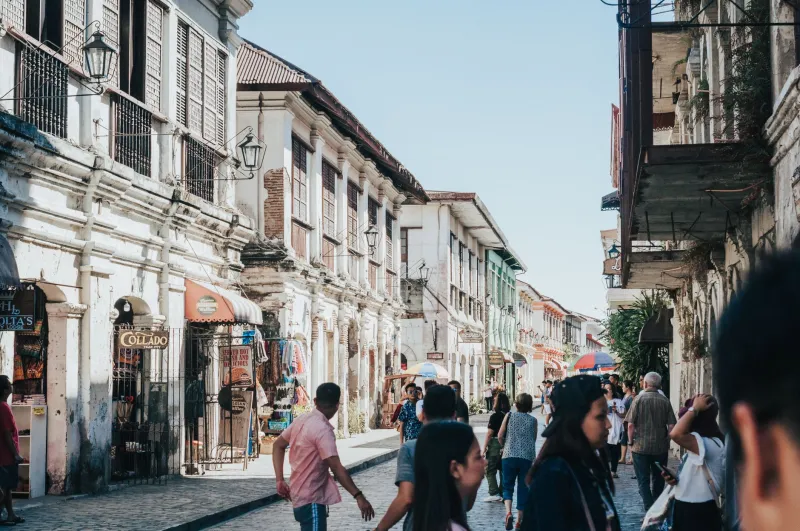
Old-world cities that grew organically — Marrakech, Fez, the medieval cores of Italian hill towns — work on completely different logic. Streets narrow, widen, dead-end, and curve back on themselves. You can't navigate them without occasionally asking for help. You bump into people. You make eye contact. The architecture of the city produces a different social contract, one where casual interaction with strangers is normal rather than exceptional.
Travelers who understand this arrive in Fez without the expectation of grid-city anonymity. They're less likely to interpret a vendor's enthusiastic greeting as an intrusion, because they understand that the city itself was built to generate that kind of contact.
Climate and the Pace of Communication
This one feels obvious once you name it, but most travelers don't consciously account for it: climate shapes the rhythm of daily life, and the rhythm of daily life shapes how communication works.
In places with extreme heat — coastal West Africa, the Gulf states, much of the Middle East — the day is structured around avoiding the worst of it. Midday is quiet. Activity clusters in the early morning and evening. Conversations that happen in the cool of the evening have a different texture than conversations forced into a narrow window of bearable temperature. They're longer. More circular. Less oriented toward conclusion.
Scandinavian communication patterns, by contrast, have been shaped in part by the compression of daylight in winter — a cultural premium on directness that some researchers connect to the practical need to communicate efficiently when time and light are both limited. Whether or not that causal chain is fully provable, the pattern is real: travelers who arrive in Finland or Denmark expecting the conversational warmth and indirection they experienced in Southern Europe are often thrown off by how quickly Scandinavians get to the point.
Neither approach is better. But understanding that climate is part of the explanation helps travelers receive it without judgment.
What This Means in Practice
So how do you actually use this while you're traveling? The first step is observation before imitation — and this is where it becomes genuinely useful as a skill rather than just an interesting idea.
When you arrive somewhere new, spend your first hour just watching how people move. Not what they do, but how they do it. How fast do they walk? Do they walk close to the walls of buildings or down the center of the street? When two people meet on the sidewalk, how do they negotiate who moves? When someone calls for a taxi or flags down a vendor, what does that gesture look like?
You're reading the landscape's influence in real time. A city with narrow streets produces people who are comfortable with physical proximity. A city with wide boulevards produces people who read distance differently. A market in a hot climate produces vendors who call out in a particular register — louder, more sustained — because the ambient noise and heat require it.
Once you've observed, you can begin to calibrate. This doesn't mean performing a culture or pretending to be someone you're not. It means adjusting your defaults — your pace, your volume, your personal space radius — to something closer to the local baseline. The result is that you stop reading as a tourist in the way your body language broadcasts, which changes how people interact with you.
The Traveler's Body as a Learning Tool
Most travel advice is cognitive: learn these phrases, know these customs, read this history. All of that is valuable. But the body is also a tool for understanding a place, and it learns differently than the mind does.
When you slow your pace to match the rhythm of a Portuguese afternoon, something shifts. When you learn to navigate the controlled chaos of a Vietnamese street crossing — moving steadily, predictably, trusting that the scooters will flow around you — you've understood something about how that city works that no guidebook explains.
Geography is always the underlying grammar. The terrain that made a culture is still there, still shaping how people move through it, still legible if you know how to look. Your body, if you let it pay attention, is one of the best instruments you have for reading that grammar.
The land has been teaching people how to move for thousands of years. As a traveler, you're just the newest student.